
Last updated: By Kumar Ashish, German Campus
Getting sick in a new country is stressful, especially when you do not know how the system works. In Germany, healthcare is good and, with statutory health insurance, most doctor visits cost you nothing. But you need to know where to go and how to book. This guide explains how to find a general practitioner (Hausarzt), what to bring, which numbers to call and how sick notes and prescriptions work.
Start with a Hausarzt
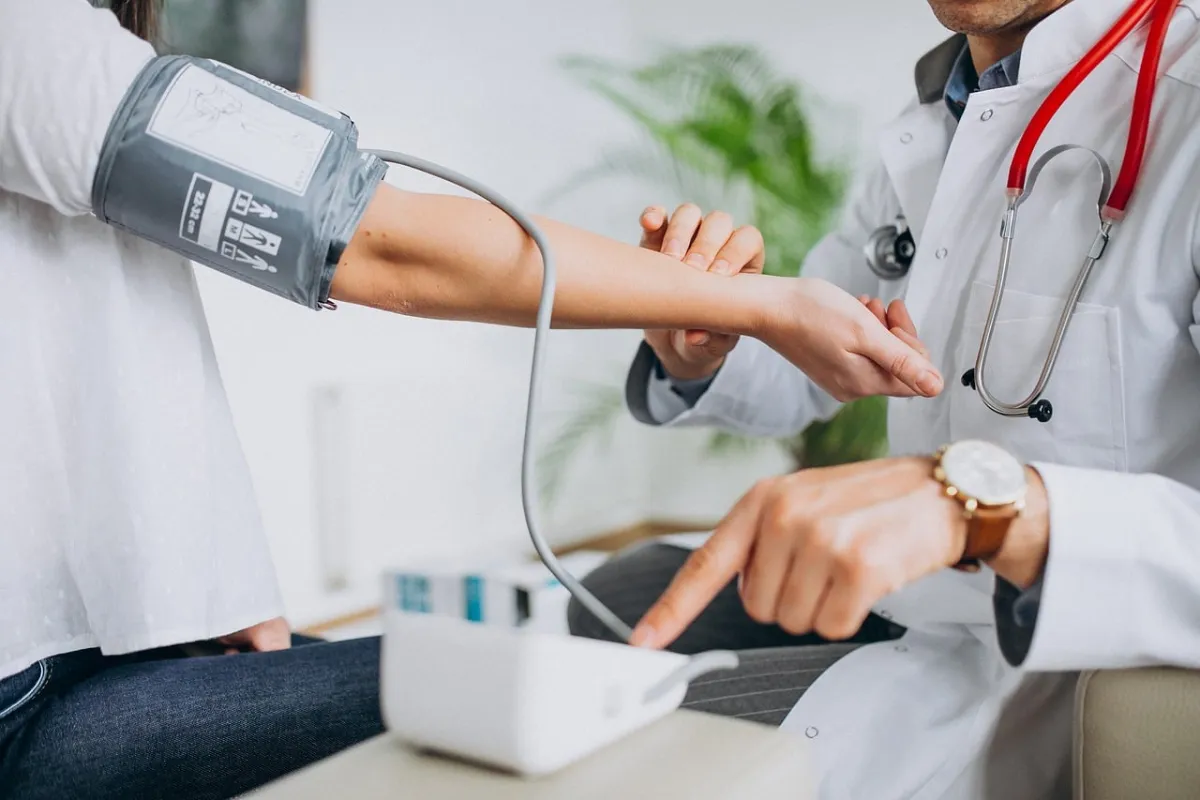
For most health problems, your first stop is a general practitioner, called Hausarzt or Allgemeinmediziner. A Hausarzt treats common illnesses, gives vaccinations, writes sick notes and refers you to specialists if needed. Having a regular Hausarzt also helps, because practices know you and can treat you faster.
To find one, ask classmates or your university’s international office, search the doctor finder of your regional association of statutory health insurance physicians (Kassenärztliche Vereinigung), or use booking apps such as Doctolib, where many practices list free appointments and the languages they speak.
What to bring
- Your health insurance card (elektronische Gesundheitskarte). Bring it at the first visit of every quarter.
- Your passport or ID if it is your first visit.
- A list of your medicines and allergies, ideally in German or English.
- If you are privately insured, be ready to pay the bill first and claim the money back from your insurer.
Important numbers
| Number | When to use it |
|---|---|
| 112 | Life-threatening emergencies: ambulance and fire brigade, free from any phone. |
| 116117 | Medical on-call service outside practice hours (evenings, weekends, holidays) when it is urgent but not life-threatening. Also helps you book appointments with doctors and specialists. |
| 110 | Police. |
The 116117 service also has an app and the website 116117.de, where you can search for urgent appointments.
Specialists, prescriptions and costs
With statutory insurance you can see many specialists without a referral, but some practices and certain specialists ask for a referral (Überweisung) from your Hausarzt, and it can help you get an appointment faster.
Prescriptions are issued as e-prescriptions (E-Rezept) for people with statutory insurance. The doctor stores it digitally, and you pick up your medicine at any pharmacy (Apotheke) by showing your insurance card. Adults usually pay a small co-payment per medicine of between €5 and €10. For night-time and weekend needs, every area has an emergency pharmacy on duty (Notdienst-Apotheke).
Test your German for freeA1 to C1 in 8 minutes, with your level and a study planStart test →
Sick notes for work and university
If you work and are sick, you must tell your employer immediately, usually before your shift starts. If you are sick for more than three days, or earlier if your contract says so, you need a doctor’s certificate of incapacity for work. Since 2023 this is mostly electronic (eAU): the practice sends it to your health insurer, and your employer retrieves it, but you still need to inform your employer yourself.
For minor illnesses, practices that already know you can currently issue a sick note by phone for up to five days. The federal government has announced plans to abolish phone sick notes, but as of November 2026 this has not been decided, so the current rules still apply.
For missed exams at university, you usually need a separate medical certificate. Check your examination office’s rules, because many universities have their own form.
Mental health support
If you feel overwhelmed, anxious or very lonely, you are not alone. Your Hausarzt can help and refer you, and most universities offer free psychological counselling for students. In a crisis, call 112 or the free Telefonseelsorge on 0800 111 0 111. Read our guide on loneliness as a foreign student for more support options.
👉 What it means for you: Find a Hausarzt before you get sick, save 116117 and 112 in your phone, and keep your insurance card in your wallet. If you are unsure which insurer to choose, compare them in our AOK vs TK vs Barmer guide.
Key takeaways
- Your first stop for most health issues is a Hausarzt (general practitioner).
- Bring your health insurance card at the first visit each quarter.
- Call 112 in emergencies and 116117 for urgent help outside practice hours.
- Prescriptions are digital (E-Rezept) and picked up at any pharmacy with your card.
- Sick notes are sent electronically, but you must still tell your employer yourself.
Frequently asked questions
Do I pay for a doctor visit with statutory insurance?
Usually not. Visits are covered. You may pay small co-payments for medicines and some treatments.
Can I find a doctor who speaks English?
Yes, especially in big cities. Booking apps and doctor finders often show the languages spoken in a practice.
What if I get sick at night or on a weekend?
Call 116117 for the medical on-call service, or go to the emergency department (Notaufnahme) of a hospital if it is serious. Call 112 in an emergency.
Can I still get a sick note by phone?
As of November 2026, yes, for minor illnesses and up to five days, if the practice already knows you. The government plans to change this, so check the latest rules.
Sources: 116117.de (official) · Stuttgarter Zeitung: phone sick notes · Federal Ministry of Health: E-Rezept
📲 Get short updates every week: follow German Campus on WhatsApp. Want to improve your German? Try our free German course.
Was this guide helpful?
Thank you! Your feedback helps us keep this guide accurate.